DREAM HOME
DREAM HOME

Tuesday, April 26, 2011

Choosing Small Home Floor Plans

Choosing Small Home Floor Plans

For future homeowners faced with rising construction material and labor costs along with shrinking budgets, it is now more important than ever to keep building costs down. In addition, LEED for Homes and the National Green Building Standard encourages homes of less than 2,500 square feet. By simplifying lifestyles and striving for more sustainability today the savvy homeowners planning to build a new home are choosing small home floor plans for both economical and practical reasons.

In a nutshell, the essence of a good small home floor plan can be found in the quality of design over quantity of space where each small space is in use every day. Good efficient small house plans are ones that live larger by the quality of their spaces not by the size or volume and number of rooms. This can result in saving more money for the fine details that define who you are and allow you to achieve lots of charm on a small budget. You will be able to place more emphasis on interior detail and livability rather than on the overall size of a space.

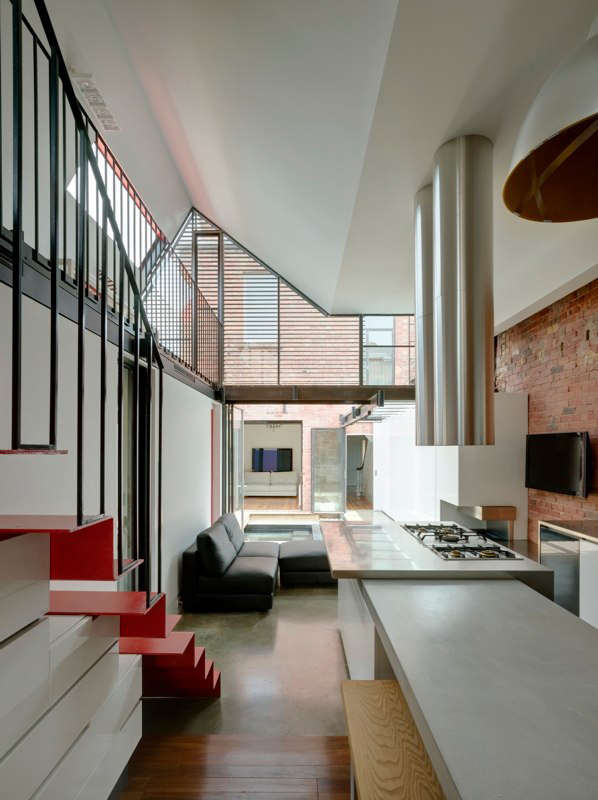
Small home floor plans don't have to look or feel small. Consider, for example, the open space concept versus individual traditional rooms. Open space floor plans can feel larger than their actual size. Floor plans with interior views, rooms not constricted by four walls, tend to give the feeling of spaciousness as well as provide the added benefit of visual interest. This type of floor plan will generally tie together different spaces within the home. A view of interior spaces enabled from open floor plans achieves the added benefit of not feeling claustrophobic


Choosing Small Home Floor Plans
Building big just to allow for lots of furniture or functions that will not always be needed may not make economical sense. A better solution would be to incorporate into the plan double duty rooms and areas. There may be many activities taking place in one room, separated only by furniture, alcoves, or nooks. One space can accommodate several different activities, thereby negating the need to have separate rooms for each activity.

Children's rooms can become guest bedrooms or home offices as many more homeowners are now working from home. Each space is defined by the activities that take place in them. It's a good idea to plan on using adaptable rooms/spaces, each designed to share various functions and, therefore, in use all the time.

The Great Room with cathedral ceilings is ideal for larger gatherings and on warm summer days can give the feeling of coolness and breathability. However, you can also break up this space by dividing it into separate areas either with furnishings, window seat, dropped ceilings or fireplace to create intimate cozy alcoves and spaces for 1 or 2 people all within the same room.

Another example is the dining area which can serve both formal and informal guests. Any unsightly views to dirty dishes for formal guests when you don't have a formal dining room can be hidden in a variety of ways - raised counter top between the kitchen and dining area, sink and dishwasher placed so as not to be in full view or furnishings such as panel screens.

Spaces within a large space can be defined by several means:

Also, consider that storage takes all shapes and kinds and doesn't have to be an actual closet. Built-ins under roof wings, window seats or nooks and crannies can often times be more useful and accessible and, therefore, make more efficient use of space. They can also serve as functional and aesthetic display shelves for books or artwork. This is a simple way to reduce the overall square footage and make a small home floor plan more feasible.

In minimizing the number of bathrooms you will actually need give careful consideration to which bathrooms can be shared. However, directly connecting 2 guest bedrooms with one bath can be rather awkward and uncomfortable for guests to share. Look instead for a bath with a single entrance yet easily accessible from both bedrooms. This also allows the use of that bathroom by day guests and yourselves as well.

Outside living spaces almost always make a smaller floor plan feel larger and add to the functional square footage of a house. Covered porches have the added advantage of making the space more usable when shelter from weather is a factor and, thus, make the space more integrated with the house. The exterior visual element of a covered porch extends the roof-line of a small house making the overall appearance seem larger.


Saturday, April 9, 2011

Design Beautiful Bedroom

Design  Beautiful Bedroom

Design  Beautiful Bedroom  If you like to read in your bedroom, you should pay special attention to the lighting in your bedroom. Dim, moody lighting may be restful, but it will cause eye strain when reading. The lighting should be at a level where you do not accidentally shade it, and tall enough to shine light on the book or magazine. Bedroom interior design professionals suggest that when using lamps in the bedroom, the lower edge of the lamp shade should be around eye level when seated.

Remember to choose colors that you find restful when decorating your bedroom. Exciting colors such as red should be avoided unless you personally find them comforting. Strong colors have been said to promote insomnia. Designing your bedroom interior with a splash of a bright color will liven up a room, but it should not be allowed to dominate.

Layered curtains in the bedroom are and excellent interior design choice. This allows you to wake up to filtered light, open the curtains for full light, or black out the room for naps and sleeping in. Blackout lined draperies will protect you from morning sun, whereas sheers or thin blinds will filter light for a gentle glow in the morning. Bedroom interior design has many options, and can be tailored to your personal preferences. The bedroom should be your sanctuary, and it is important to feel comforted and restful when you are there.

Sports Home Decorating Ideas

 Sports Home Decorating Ideas
add special accents like pennants and signs for your team or sport(s). These are widely available for a variety of College and Professional teams or generically. They are easy to hang and are a great way to add personality and brightness to a wall. Also, consider adding sports-themed clocks, mirrors and framed jerseys.

For that authentic sporting look and feel, decorate with real sports equipment. You can attach hockey sticks and tennis rackets to the walls. You can display baseballs, footballs, basketballs, and other small sporting goods on shelves and in curio cabinets. Get shoes and skates and hang them from hooks after tying the shoe laces together. Hang a basketball hoop on the wall and fill with foam balls of all types. Place a small soccer goal on one end of a room and place in the goal small sports-themed bean bag chairs or a locker for storage.

Lastly, add sports-themed lighting lamps and accessories to the room. Choose ceiling, wall, or table lamps. Small accent lamps can be used in bathrooms, hallways or in the kitchen. Add light switch covers and night lights for that special touch of your favorite team or sport(s).

Sports-themed decorating is the perfect home décor choice for your entire house. Enjoy.

Art Home Decor interior

Art Home Decor interiorSince Japan began to limit foreign influence early in its history, China's art trends were allowed to have only a limited effect on its art and culture. The Chinese influence is still evident because of China's age and even longer history. However, Japan successfully created its own identity and has maintained it in a disciplined way over time. Painting is considered to be the preferred artistic expression. In Japan, painting is practiced by both amateurs and professionals. Ceramics of the Japanese variety are considered to be among the finest in the whole world. This is equally true of the earliest artifacts known in their culture. Japan seems to have always taken great pride in the way their art was crafted... and how. So in the related field of architecture Japan prefers natural materials along with an interaction of interior and exterior space. The way this interaction is designed displays the distinctly "Japanese" origin.

The result for today, as far as the society of Japan is concerned, is that their nations rivals all other modern countries in its contributions to modern art. Japan can rightfully boast of its added contributions to modern fashion and architecture. Their unique creations have a profoundly modern, global, and even multi-cultural appeal. All of these accomplishments have come about because Japan has always known "who" it is and "where" it has come from. Modern home decoration products are plentiful on the internet market today. Japanese Haiku designs offer an excellent collection of platform beds, shoji screens, rice paper lamps, and silk scrolls. Japanese garden fountains are genuinely attractive in any Asian home. Tatami floor mats, meditation gongs/chimes, cotton kimonos, hanging scrolls, and tapestry are all more options to create a truly Japanese culture in your home no matter where you live.

So it is obvious that the manner one would go about decorating with a Japanese intent would be unlike other Asian schemes at crucial points. It would be wise to learn about all the options in Japanese decor since the choices, products, and services are very plentiful in the crowded, internet world. Wishing you the very best of luck!

Japanese Art and Culture in Home

Japanese Art and Culture in Home  Western people often ask, "Isn't all Asian home decor about the same?" The shortest answer is simply, "Absolutely not!" The traditional school of thought in Japanese home decoration has been influenced by its own unique culture. As you may already know, Japan sees the focus of home decor to rest upon spatial matters. This is why shoji screens are often used in the Japanese household. The correct use of space is the implied purpose in this tradition. It is helpful to know a few facts about Japan's collective art, its long history, its unique society, and its distinctive culture to better appreciate their viewpoint on Asian home decor.

Generally speaking, Japanese art covers a wide range of styles which would include media as well. Ancient pottery, sculpture in wood and bronze, and ink painting on silk and paper are all important parts of the traditions dating back thousands of years. These art forms, needless to say, also have a very long history. They were evident from the beginnings of human habitation in Japan which is roughly dated in the 10th millennium B.C. They have remained constant to the present.

Historically, Japan has been subject to sudden invasions of new and foreign ideas. These invasions were followed by long periods of time when there was little contact with the outside world. These facts in Japan's art world reflect similar political and social realities. So, over the course of time, Japanese people developed the skillful ability to assimilate certain foreign elements from outside cultures. However, they were careful to ensure that these foreign elements were a distinct complement to their own aesthetic preferences. Japan has always been very insistent about keeping foreign influence in their art and society to a minimum.

The earliest complex art in Japan was produced in the 7th and 8th centuries A.D. There was a definite connection to Buddhism in this trend as well. In the 9th century the Japanese began to turn away from China and to develop more indigenous kinds of art expression. In this period secular arts became more and more important to Japan. However, until the latter 15th century both religious and secular art forms continued to flourish. It was after the Onin War (1467-1477) that Japan entered a period of political disruption which consequently deeply influenced their social and economic systems. This disruption's effect lasted for more than a century.

Interior Design Ideas For A Beautiful living room

Interior Design Ideas For A Beautiful  living roomThe living Roomis in some ways the most important room in the house. It is the sanctuary away from the troubles of the world, the ultimate escape from day to day life. Behind closed doors in the bedroom, problems can be forgotten. To create a setting for restful slumber, think about what colors and styles produce the greatest happiness and peace of mind. In your bedroom, you can have the off the wall decorations you've always wanted. The bedroom is private, so the interior design of your bedroom is all about you.

Your bedroom does more than just serve the need for a place to sleep. It accommodates you at all times of day, providing space for reading, studying, watching TV, talking on the phone, eating, and using the computer. Because of this, the bed is no longer the primary piece of furniture in the bedroom. Bedroom desks, large nightstands, or a television might be a better focus for your bedroom interior design. If you watch a lot of television in your bedroom, you might want to consider a chair and ottoman for more comfortable viewing.